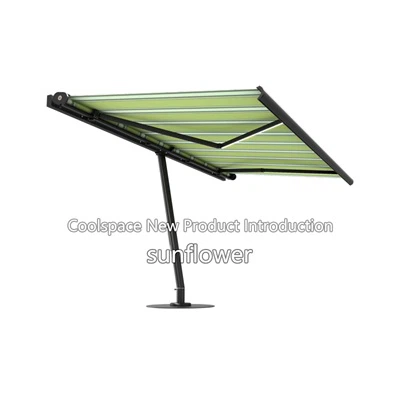

Sunroom awnings, as important components connecting indoor and outdoor spaces, rely heavily on scientific and standardized daily care for their durability and aesthetics. Unlike ordinary building materials, awnings are exposed to varying weather conditions and sunlight for extended periods, making them susceptible to dust accumulation, rainwater erosion, and mechanical wear. Improper maintenance can not only affect their performance but also shorten their service life. Therefore, establishing a systematic maintenance mechanism is crucial to ensuring their functionality and value.
Cleaning should be a regular task. Awning surfaces are often made of fabric or coated film materials. Use a neutral detergent and a soft brush, avoiding strong acids or alkalis that can corrode the surface coating or cause fiber aging. Cleaning frequency can vary depending on the environment: monthly cleaning is recommended in dusty urban areas, while coastal or industrial areas with higher levels of salt spray and pollutants may require cleaning every two weeks. When cleaning, wipe gently along the fabric grain to prevent damage to the waterproof membrane, and allow it to air dry naturally in a shaded environment. Avoid direct sunlight or high-temperature drying to prevent material shrinkage and deformation.
Inspection and maintenance of structural components are equally important. Brackets, guide rails, and transmission parts may loosen or rust due to wind and rain loads during long-term use. Check the tightness of bolts quarterly, apply anti-rust grease to metal parts, and perform unloaded test runs of the electric drive system to ensure smooth opening and closing without abnormal noises. If you find the awning edges lifting, seams loosening, or coating peeling, repair or replace the affected components promptly to prevent the problem from spreading to the entire structure.
Seasonal protection should be tailored to local conditions. Before winter, in northern regions, clear snow from the awning surface and retract it appropriately to reduce stress on the frame from freezing and thawing. Before windy seasons, check the fixing points and connectors, and reinforce windproof ropes if necessary to reduce the risk of overturning. During long periods of disuse, the awning should be fully retracted and covered with a dust cover, stored in a well-ventilated and dry place to prevent mold growth or metal corrosion caused by dampness.
Furthermore, avoid placing sharp or heavy objects on the awning surface or performing cutting operations to prevent mechanical damage. During maintenance, if complex malfunctions or extensive damage occur, they should be assessed and handled by qualified professionals. Do not attempt to disassemble core components yourself.
In short, the daily maintenance of sunroom awnings is a continuous process that integrates prevention, inspection, and repair. Only through meticulousness and patience in daily care can the awning remain stable and reliable over time, continuously providing comfortable and safe light and shade control for the space.
 English
- English
- Français
- Deutsch
- 日本語
- Italiano
- Español
- Português
- русский
- Nederlands
- Melayu
- українська
- Norsk
- suomi
- Ελληνικά
- magyar
- ไทย
- bosanski
- Polski
- Latviešu
- Malti
- slovenčina
- Български
- עברית
- Việt Nam
- Svenska
- Čeština
- فارسی
- Lietuvių
- Indonesia
- Eesti
- اردو
- hrvatski
- Gaeilgenah Éireann
- O'zbek
- Català
- Türkçe
- 한국어
- Bai Miaowen
- dansk
- हिंदी
- Srbija jezik (latinica)
- বাংলা
- عربي
- Cymraeg
- slovenščina
- România limbi
- Kreyòl Ayisyen
- íslenska