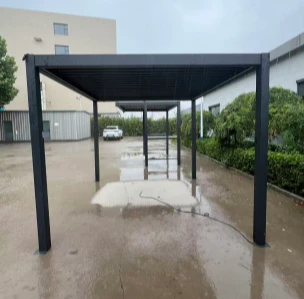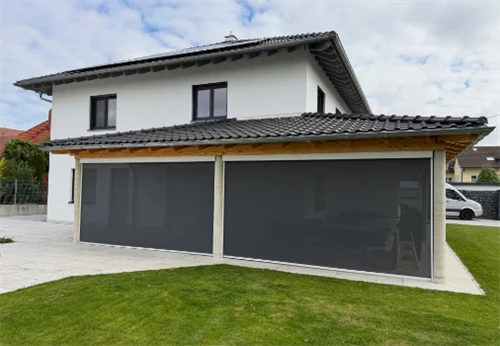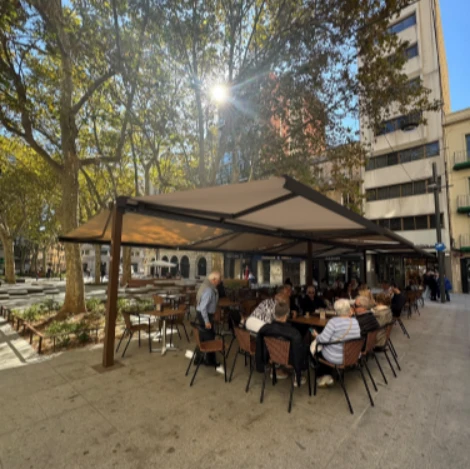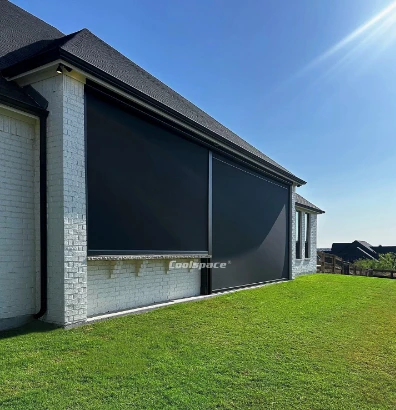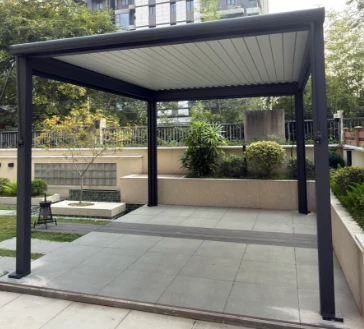

Solar shading is often reduced to a simple idea: a piece of fabric that blocks the sun. That description misses what shading actually does. A well-designed shading system redistributes solar gain before it ever reaches the glass, turning an unusable terrace into a comfortable living space and cutting cooling demand at the source.
The energy logic is straightforward. Exterior shading intercepts solar radiation before it enters the building, reducing cooling loads by 30% to 50%. Interior shading, while convenient, works after heat has already passed through the glass. This is why installation position matters more than most buyers realize.
But performance over time depends on something less visible: the fabric. Most outdoor shading fabrics fall into two categories. Coated fabrics apply a protective layer on top of a base cloth. Once that layer cracks or peels under UV exposure and temperature swings, fading and water penetration begin. Solution-dyed fabrics work differently. Color is integrated into the fiber before it is spun, so the fabric retains its appearance even after surface wear. This is why solution-dyed acrylic fabrics can offer warranties of eight to ten years against fading, while coated fabrics typically promise far less.
Comfort follows the same logic. Shading can lower indoor temperatures by up to 2°C in closed conditions, but only if the fabric continues to perform season after season. Solar shading is not a commodity accessory. It is a spatial strategy, an energy measure, and a material decision. The fabric you choose determines whether that strategy holds up in year three-or year ten.