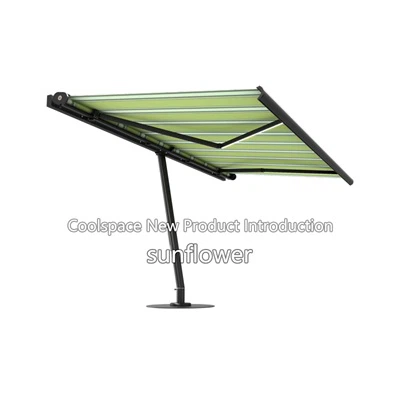

Window awnings, as an important component of building exterior shading systems, exhibit technical characteristics in multiple dimensions, including precise environmental response, composite material performance, optimized structural design, and intelligent and controllable operation. These characteristics collectively provide comprehensive advantages such as efficient shading, heat insulation and energy saving, and improved comfort, leading to their widespread application in modern architecture.
Firstly, they possess significant light and heat control capabilities. Window awnings, through the flexible adjustment of the awning angle and extension length, can create an effective shaded area in front of the window, weakening the intensity of direct solar radiation and reducing the entry of infrared and ultraviolet rays into the interior. By selecting high-reflectivity or selectively transparent materials, they can block excessive light and heat while retaining moderate diffused light, thus avoiding glare and maintaining a bright indoor environment. This light and heat control characteristic directly contributes to reducing summer cooling loads and improving indoor thermal comfort.
Secondly, material technology is trending towards multi-functional composite materials. Modern window awning fabrics have evolved from single fabrics to composite systems that integrate waterproof, UV-resistant, weather-resistant, self-cleaning, and even fire-resistant properties. For example, polyester fiber base fabric treated with PVC or PU coating can simultaneously achieve waterproofing, stain resistance, and aging resistance; fluorocarbon coated films have high weather resistance and color stability; and some polymer panels combine high impact resistance and UV protection. These composite properties enable awnings to withstand harsh environments such as rain, snow, strong sunlight, and temperature changes for extended periods, extending their service life and reducing maintenance frequency.
Thirdly, structural design and mechanical performance are continuously optimized. The support system widely uses lightweight and high-strength aluminum alloys, galvanized steel, or composite materials, reducing self-weight while ensuring rigidity and stability, and lowering the load on the building walls. The cross-sectional design of the cantilever and beams is optimized through aerodynamic and stress analysis, effectively dispersing wind loads and suppressing vibrations. Connection methods emphasize modularity and adjustability, making them easy to adapt to different window types and facade conditions, while ensuring that installation accuracy and overall safety factors meet building code requirements.
Fourthly, operation methods are becoming more intelligent and convenient. Window awnings can be equipped with manual or electric drive systems. Electric models often integrate light, temperature, wind, rain, and time-based control functions, allowing for automatic adjustment of opening, closing, and angle based on environmental changes. The intelligent control system can also be integrated with building management platforms for remote monitoring and scene linkage, improving convenience and energy efficiency management. In terms of safety, features such as wind resistance limits, anti-pinch protection, and emergency braking are included to ensure reliable operation under extreme conditions.
Fifthly, emphasis is placed on integration with architectural aesthetics and the environment. The awning's color, texture, and shape can complement the building's facade style, softening window outlines and enriching visual effects. Through reasonable layout and transparency control, the awning blocks strong sunlight while maintaining clear views and a psychological connection between indoor and outdoor spaces, balancing privacy and openness.
In summary, the technical characteristics of window awnings are reflected in their efficient light and heat control capabilities, diverse high-performance material applications, optimized structural mechanics design, intelligent operation control, and excellent architectural adaptability. These technical advantages demonstrate their significant value in energy saving, improving the living environment, and enhancing building quality, providing a reliable and sustainable solution for modern building shading.
 English
- English
- Français
- Deutsch
- 日本語
- Italiano
- Español
- Português
- русский
- Nederlands
- Melayu
- українська
- Norsk
- suomi
- Ελληνικά
- magyar
- ไทย
- bosanski
- Polski
- Latviešu
- Malti
- slovenčina
- Български
- עברית
- Việt Nam
- Svenska
- Čeština
- فارسی
- Lietuvių
- Indonesia
- Eesti
- اردو
- hrvatski
- Gaeilgenah Éireann
- O'zbek
- Català
- Türkçe
- 한국어
- Bai Miaowen
- dansk
- हिंदी
- Srbija jezik (latinica)
- বাংলা
- عربي
- Cymraeg
- slovenščina
- România limbi
- Kreyòl Ayisyen
- íslenska